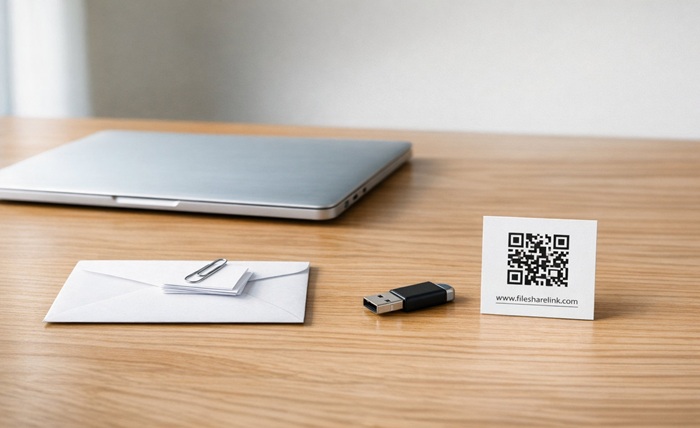
As digital learning environments advance, the ways students and educators share files are rapidly evolving. Choosing between email attachments and dedicated file sharing services has become more complex as classroom needs shift. This article clarifies the practical, security, and collaboration differences central to modern educational settings.
Email attachments remain a convenient choice for quick file transfers, especially for commonly used documents and homework tasks. However, as classrooms increasingly use video projects, multimedia, and robust datasets, large file sharing often becomes a necessity alongside basic email solutions. The choice between these methods can affect both classroom productivity and information security. Understanding how each approach works, and when each is most suitable, will help you manage files more effectively and securely.
Limitations of email attachments in daily use
Email attachments are built for simple, direct sharing but impose strict size limits that can disrupt classroom workflows. Many educational institutions cap individual email attachments at around 25 MB, making it difficult to send high-resolution images, presentations, or recorded lessons via traditional email platforms.
Attempting to compress files often leads to quality loss or compatibility problems. When file sizes exceed platform limits, messages can be returned undelivered. This may interrupt student submissions or collaborative work, resulting in delays and confusion when deadlines are near.
Version control creates additional challenges when multiple copies of a document circulate as attachments. Tracking the most recent file can become complex, especially if files are renamed or edited out of sequence among recipients. Organizing coursework or reference material through each user’s inbox may also create long-term confusion, with opportunities for files to be misplaced or overlooked.
File sharing platforms for complex classroom content
Dedicated file sharing services are designed for larger, more complex files and make access simpler for groups. Instead of sending the file itself, you upload to a central location and generate a link for students or colleagues, which helps prevent email overload and keeps materials organized.
This method is particularly useful in classrooms using media-rich resources or sharing multiple file versions. It is an efficient way to manage collaborative projects that involve frequent updates and various file types. Many platforms support video, presentations, and extensive datasets without the traditional attachment size restrictions.
These services are beneficial for school projects that rely on stable resource access, allowing all participants to refer to a single location. In practical terms, large collaborative assignments are less likely to be affected by the confusion that can arise when files are distributed and edited in separate email threads.
Network speed, reliability, and delivery outcomes
Email attachments can be practical for simple transfers, but their reliability drops when connections fail or inboxes become full. Large file sharing helps minimize the need to resend files and, as a result, reduces the risk of incomplete transfers when bandwidth varies across student or school networks.
Retries, delays, and accidental resending often occur if attachments fail to deliver, particularly during periods of heavy remote learning demand. Recipients with slow internet or mobile access might encounter stalled downloads or receive partial files, undermining the learning experience if materials do not arrive intact.
Link-based delivery models address some of these problems by allowing downloads to resume if interrupted. Large file sharing can streamline this process, particularly for busy classrooms that rely on reliable and timely access to shared resources.
Security, privacy, and collaborative workflows
Email attachments risk accidental exposure if addresses are mistyped or a message is forwarded outside the intended group. Once a file is sent as an attachment, there is less control over who views, downloads, or shares the document, which can be a concern when working with sensitive data or proprietary educational content.
Modern file sharing services offer features such as password protection, expiration dates, and detailed access options to better protect sensitive files. Activity logs and audit trails also allow for better monitoring of document access within educational teams or project groups, without being intrusive.
For group projects, file sharing platforms permit updates to be made in a single location, ensuring everyone works with the latest version. This reduces confusion caused by multiple attachments and fits classroom environments using mixed devices and technologies. The ability to collaborate from any device, whether it is a laptop or mobile, supports more flexible teaching and assignment processes.
Attachments remain sufficient for fast distribution of small, non-sensitive documents when privacy or collaboration is not essential. However, as file sizes or sensitivity increase, or when access is required by multiple students at different times, dedicated file sharing services become more appropriate. Assess your requirements based on project scale, privacy, and file version management for your teaching or studies.