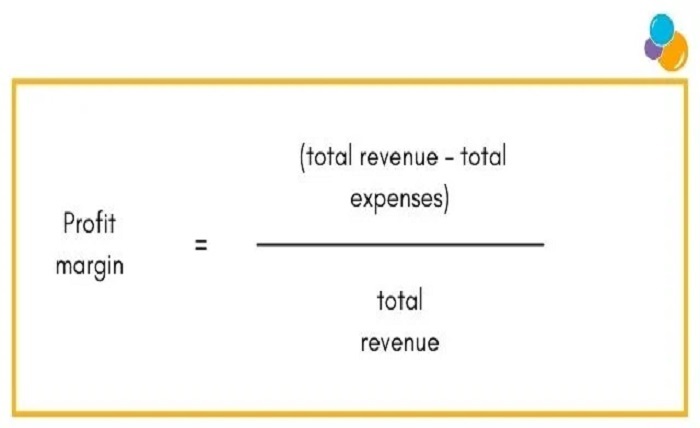
You’ve been there. You lower your price to win the Buy Box. A competitor undercuts you by a nickel. You go lower. They go lower still. Within hours, a product that should generate healthy profits is barely breaking even. Everyone’s revenue shrinks, margins evaporate, and nobody actually wins except the customer who gets an unsustainably low price.
This is the classic price war, and it’s destroyed more Amazon businesses than almost any other factor. Sellers get trapped in a destructive cycle, believing that the lowest price always wins. They sacrifice profitability for volume, hoping to make it up somehow, somewhere down the line. Spoiler alert: that rarely happens.
The traditional approach to pricing creates this environment. When humans make pricing decisions based on emotion, pride, or desperation, rational strategy goes out the window. We take competitor price cuts personally. We react instead of strategize. We make decisions that feel right in the moment but damage our business long-term.
Why Humans Make Terrible Pricing Strategists
Our brains aren’t wired for optimal pricing decisions. We’re emotional creatures who value winning individual battles over winning the war. When we see a competitor take the Buy Box, we feel an immediate urge to take it back—regardless of whether it makes financial sense.
Humans also struggle with consistency. Some days we’re aggressive. Other days we’re conservative. Our mood, energy level, and what happened earlier in the day all influence pricing decisions. This inconsistency makes it impossible to develop and execute a coherent long-term strategy.
We’re also painfully slow. By the time we notice a price change, analyze it, decide on a response, and implement it, market conditions may have shifted again. In fast-moving categories, minutes matter. Human reaction times measured in hours simply can’t compete.
The AI Advantage in Competitive Pricing
Artificial intelligence approaches pricing completely differently. It doesn’t get emotional. It doesn’t take competitor moves personally. It simply executes strategy with mathematical precision, optimizing for the goals you’ve defined.
An Amazon repricer powered by smart algorithms can monitor hundreds of competitors simultaneously, something no human could manage. It processes this information instantly, identifying patterns and opportunities that would take humans hours to spot—if they spotted them at all.
More importantly, AI can play the long game. It understands that losing the Buy Box for thirty minutes to maintain margins might be the right strategic move. It won’t panic and slash prices out of fear. It executes your predetermined strategy consistently, without deviation based on emotion or fatigue.
Strategic Pricing vs. Reactive Pricing
Most sellers operate reactively. They wait for something to happen, then respond. This puts them perpetually one step behind market movements.
AI-driven repricing is proactive. It anticipates common scenarios and responds according to predetermined rules. If Competitor A drops their price, the system knows exactly how to respond based on that competitor’s inventory levels, rating, and historical behavior. There’s no delay, no deliberation, no second-guessing.
This shift from reactive to proactive transforms your competitive position. Instead of constantly playing catch-up, you’re operating with the same speed and consistency as the most sophisticated sellers in your categories.
The Margin Protection Framework
Smart repricing isn’t about winning every single sale. It’s about maximizing profitability over time. This requires a framework that protects margins even while staying competitive.
First, establish absolute minimum prices below which you’ll never sell. These floors account for all your costs plus your required margin. The repricer will never violate these boundaries, even if competitors price lower.
Second, implement velocity-based pricing. For fast-moving inventory you need to clear, the system can be more aggressive. For slow-moving or unique items, it can maintain higher margins and wait for the right buyer.
Third, use competitor-specific rules. Not all competitors deserve the same response. A seller with poor ratings or slow shipping doesn’t threaten your Buy Box position as much as a highly-rated Prime seller. Your repricer should understand these nuances and adjust accordingly.
Dynamic Pricing Captures Opportunity
Markets aren’t static, and your prices shouldn’t be either. The optimal price for a product changes based on time of day, day of week, season, and competitive landscape. AI-powered repricing adapts continuously to capture maximum value.
During periods of high demand and low competition, why charge the same price as during highly competitive periods? Smart systems gradually test higher price points when conditions allow, discovering the ceiling where sales velocity begins to drop. This dynamic approach can increase revenue significantly without adding any inventory or operational complexity.
Learning from Every Transaction
Every sale, every Buy Box win, and every pricing adjustment generates data. Over weeks and months, AI systems build sophisticated models of how your products perform at different price points under various conditions.
This learning is invaluable. You’ll discover that some products are highly price-sensitive—small changes dramatically impact sales velocity. Others are relatively inelastic—customers buy them regardless of minor price variations. Understanding this allows you to optimize pricing strategy product by product.
The system also learns competitor behavior patterns. Some sellers always undercut by exactly one penny. Others use percentage-based pricing. Some only adjust prices during business hours. Understanding these patterns allows more strategic responses.
Ending the Race to the Bottom
When multiple sellers in a category all use intelligent repricing with proper margin protections, something interesting happens: the race to the bottom ends. Nobody can profit from selling below cost, so the market finds equilibrium at sustainable price points.
This benefits everyone except the small minority of sellers who were willing to lose money for volume. Healthy businesses can thrive, customers still get competitive prices, and the marketplace becomes more stable.
Implementation Without Overwhelm
Starting with AI-driven repricing doesn’t require a complete business overhaul. Begin with your highest-volume products where even small improvements in pricing efficiency generate significant revenue gains.
Set conservative parameters initially. You can always become more aggressive as you build confidence in the system. Monitor results daily for the first week, then weekly, then monthly as the system proves itself.
The Competitive Imperative
Markets evolve, and tools that were competitive advantages five years ago are now baseline requirements. Automated repricing has reached this tipping point. Choosing not to implement AI-driven repricing is choosing to compete with one hand tied behind your back.
From Exhaustion to Excellence
Imagine checking your dashboard and seeing steady sales, healthy margins, and Buy Box percentages that keep climbing. Imagine not worrying about what competitors did overnight. Imagine having confidence that your pricing strategy is executing perfectly, continuously, without your constant intervention.
This isn’t fantasy—it’s the reality for sellers who’ve embraced intelligent repricing. They’ve moved from the exhausting grind of manual price wars to strategic management of automated systems. They’ve reclaimed their time and their margins.
The price war is over for them. The question is when it will be over for you.