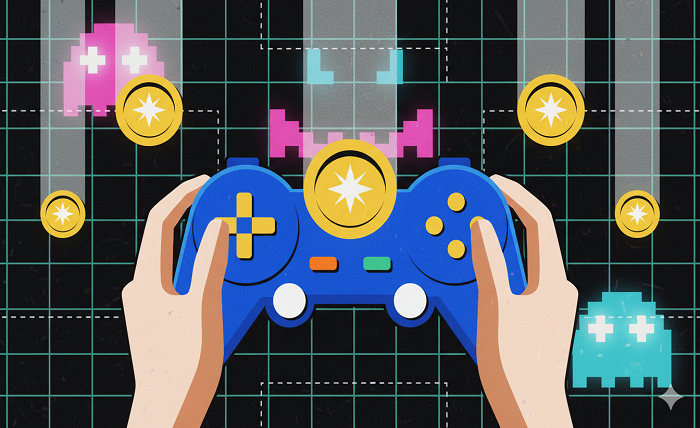
Students who resist sitting down with a textbook will often spend hours working through a math puzzle if coins drop every time they get an answer right. That contrast tells you a lot about how motivation works, and why educational game designers have leaned so heavily on virtual currency systems. The mechanics are deliberate, rooted in psychology, and far more sophisticated than they first appear.
Virtual Rewards Activate Real Motivation
The human brain does not distinguish neatly between a physical reward and a symbolic one. When a student earns a gold coin or a star badge after completing a reading challenge, the brain registers that as a small win.
Dopamine releases. The desire to repeat the action strengthens. This is operant conditioning in a digital shell, a concept behavioral psychologists identified decades ago, now precisely embedded in game design.
What makes virtual currency particularly effective in educational contexts is the immediacy of the reward. Traditional schooling often delays feedback; tests are graded days later, and progress reports come at the end of the term. A game delivers a coin the second a correct answer is submitted. That immediate loop between action and reward is one of the most powerful drivers of repeated behavior. Students do not have to wait to feel successful. They feel it in the moment, which makes them want to continue.
There is also an element of ownership at play. Virtual currencies accumulate. Students can see their balance grow, spend it on in-game items, or unlock new levels. This sense of ownership over something earned through effort builds intrinsic motivation over time. The currency becomes a visible record of work done, which carries its own psychological weight.
How Game Design Structures the Earning Experience
Educational game developers do not hand out rewards randomly. The distribution is carefully structured to maintain engagement without trivializing the experience.
Variable reward schedules, where the size or type of reward changes unpredictably, tend to produce more sustained engagement than fixed ones. A student who knows exactly what they will earn has less reason to stay curious. One who might receive a rare item or bonus currency after a challenge has a stronger pull to keep going.
Progression systems matter just as much as the rewards themselves. Many educational platforms layer their currency mechanics so that early stages offer frequent, smaller rewards that gradually give way to larger but less frequent payouts. This mirrors the natural arc of skill development. Early learners need constant encouragement. As competency grows, the challenge increases, and rewards become harder to earn, which, paradoxically, makes them feel more meaningful.
Some platforms also use currency to create social dynamics. Leaderboards that display accumulated coins, or cooperative challenges where groups pool their earnings, introduce a social dimension to motivation.
Students are no longer just competing against a problem; they are competing or collaborating within a community. That shift from individual to social reward structures taps into a different but equally powerful motivational drive.
The Concept Has Been Reflected in Other Types of Games
The concept of earning virtual currencies in educational games has proven so effective and sustainable that it has migrated well beyond the classroom.
Designers across many different platforms have recognized that structured earning mechanics keep users engaged, create a sense of progress, and build habitual return behavior. The system works because it respects the psychology of effort and reward, and that dynamic is not exclusive to learning environments.
Fitness apps are a strong example of this. Platforms like fitness trackers and health challenges award users with virtual coins or achievement badges for hitting daily step goals, completing workout streaks, or logging runs.
The mechanics are almost identical to those used in an educational game: consistent effort is tracked, milestones trigger rewards, and the accumulating balance serves as a motivational tool in itself. A person who might skip a morning run thinks differently when they know it will break a streak or cost them points they’ve earned. The currency gives the behavior a visible value it would not otherwise have.
Interestingly, other gaming spaces, including the online casino space, have also adopted aspects of this approach. Uudet pikakasinot, Finnish fast-deposit and fast-withdrawal casino sites, have implemented slot games in which players earn wilds, scatters, and bonus symbols during gameplay, serving as additional features they can activate or build on as they continue playing.
While the context is entirely different from education, the underlying mechanic echoes the same principle: earning something through active engagement, accumulating it, and using it to unlock further possibilities within the game. The earned element adds a layer of agency that purely passive gameplay lacks.
The Role of Autonomy in Sustaining Engagement
One reason virtual currency systems outlast simple point counters is the autonomy they create. Points indicate how well a student did. Currency gives them something to do with that performance.
The ability to choose how earned rewards are spent, whether on customizing an avatar, unlocking a new game mode, or accessing bonus content, transforms the student from a passive recipient into an active decision-maker. That autonomy is psychologically significant.
Self-determination theory, a well-established framework in motivational psychology, identifies autonomy as one of three core needs that drive sustained engagement. The other two are competence and relatedness.
A well-designed educational currency system addresses all three. Spending decisions support autonomy. Earning through correct answers builds competence. Shared currencies or cooperative challenges create relatedness. When a game design aligns with all three of these needs simultaneously, it produces engagement that is genuinely hard to walk away from.
This explains why students will sometimes continue playing an educational game after the assigned task is complete. They are not doing extra schoolwork; they are exercising agency within a system that responds meaningfully to their choices. The learning embedded in those additional minutes is a byproduct of good motivational design, not a result of external pressure.
When the System Works Against Its Own Goals
Virtual currency mechanics are not without risk. When rewards become the primary focus, the underlying learning objective can fade into the background.
Students who are laser-focused on earning coins may rush through problems, prioritize speed over understanding, or exploit loopholes in the game’s logic. At that point, the currency system has inverted its own purpose; it is driving behavior, but not the behavior the designer intended.
Over-rewarding is another real concern. If currency is distributed too freely, it loses its perceived value. Students quickly calibrate how much effort a reward is worth.
A platform that hands out coins for minimal engagement will find that students disengage once they realize the currency does not represent genuine achievement. Scarcity and challenge are not obstacles to motivation; they are part of what makes motivation work.
The most effective educational platforms treat currency as a feedback mechanism rather than a bribe. The goal is not to make students want coins; it is to make students want to learn, with coins serving as a real-time signal that they are progressing. That distinction in design philosophy makes a measurable difference in outcomes. When done well, virtual currency turns effort into something visible, spending into something meaningful, and learning into something worth returning to.